How Lack of Sleep Impacts Your Mental Health
|
|
Time to read 4 min
|
|
Time to read 4 min
In a busy world, sleep often slips down the priority list—but it remains a foundation for emotional balance, clear thinking, and resilience. When sleep is short or fragmented, the brain’s overnight “reset” is cut short: memory processing is less efficient, stress systems stay more activated, and emotional regulation gets harder. Over time, that can look like irritability, low mood, anxious thinking, and difficulty focusing.
For a broader set of tools (including insomnia, sleep apnea and rest strategies), see the hub: Sleep Disorders & Solutions — A Complete Comfort Guide.
Research links short or inconsistent sleep with higher likelihood of anxiety and low mood. That’s an association, not a guarantee—and improving sleep habits often helps people feel more steady.
Sleep and mental health influence each other. Worry can keep you awake; poor sleep can intensify worry the next day. Low mood can fragment sleep; fragmented sleep can lower resilience. The practical win is that working on either side—sleep habits or daytime coping—often benefits both.
Short or fragmented sleep can heighten next-day stress sensitivity and anxious feelings for many people. Improving sleep consistency and using simple wind-down cues often helps lower that “on edge” feeling.
Adults typically feel best with about 7–9 hours a night, but quality and regularity matter, too. A steady wake time plus a calm pre-bed routine can be as impactful as total hours.
Short, early-afternoon naps (20–30 minutes) can boost alertness without harming night sleep. Long or late naps may make it harder to fall asleep at your usual bedtime.
Pick a consistent wake time and start a 15-minute wind-down (dim lights, warm shower, paper book). Repeat nightly for a week and evaluate how you feel.
Research shows that chronic short sleep is linked with a higher likelihood of depressive symptoms. Improving sleep patterns can support mood stability and is often included in care plans.
Evening blue light can delay melatonin timing, making it harder to fall asleep. Reducing screens an hour before bed or using warm light filters helps minimise disruption.
Some people feel benefits after a few consistent nights; others need several weeks. Small, regular improvements compound—focus on routine, not perfection.
Consistency helps your body clock, but most adults still feel best at 7–9 hours. If 6 is all you can manage short-term, keep the timing steady while you work toward more total sleep.
Some people find magnesium calming. Responses vary, and supplements can interact with medications—speak with your clinician before starting anything new.
Fix your wake time first, get morning daylight, move caffeine earlier, and nudge bedtime earlier by ~15 minutes every few days. Be consistent for 1–2 weeks.
Yes. Daytime activity supports sleep, but vigorous exercise close to bedtime can be too stimulating. Aim to finish hard sessions at least 3 hours before bed.
For some, full-body support reduces fidgeting and creates a grounded, “held” feeling that can ease tension. It’s a comfort aid—pair with good wind-down habits.
Cognitive Behavioural Therapy for Insomnia is a first-line, non-drug treatment with strong evidence. It targets thoughts and routines that keep insomnia going.
Disclaimer: This article offers general comfort and lifestyle suggestions only. It is not medical advice. For evaluation, diagnosis, or treatment, speak with a qualified healthcare professional.
2 minutes · Personalised
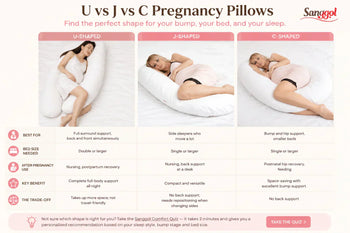
Not sure which pillow shape suits you?
Answer 5 quick questions about your sleep style, bump stage and bed size — we'll match you to the right pillow.
Take the Comfort QuizU · J · C Shaped
Find the pillow designed for your body
Three shapes, each built for a different sleep style and support need. Free UK delivery and 24-month guarantee included.
Shop Body PillowsFree downloads
Free guides, checklists and sleep plans
Download our free Mum-to-Be hospital bag checklist, birth partner guide and 7-Day Sleep Plan — no purchase needed.
Get the Free GuidesWant to keep reading?
Browse all articles by topic