Pregnancy Pillow Guide: Better Sleep in the 1st, 2nd, and 3rd Trimester
|
|
Tijd om te lezen 4 min
|
|
Tijd om te lezen 4 min
Pregnancy can be magical — but it’s also physically demanding. Hormonal shifts, growing pressure points, and repeated night waking can make sleep feel frustratingly out of reach.
This guide explains how to use a pregnancy pillow properly — based on your sleep style and the trimester you’re in — so you can reduce strain, improve alignment, and settle more comfortably at night.
If your main issue is hip or back pain while sleeping, start with our deeper guide on Back and Hip Comfort in Pregnancy — then return here for full setup guidance.
As pregnancy progresses, your centre of gravity shifts forward. This increases strain on your lower back, hips, knees, and shoulders. Even if you’ve always slept comfortably, those old positions may stop feeling supportive.
A pregnancy pillow helps by:
When should you start? Most people begin in the second trimester, but there’s no rule. If you’re uncomfortable, start now.
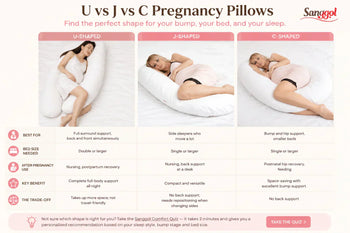
Different shapes suit different sleepers and spaces. Choosing the right structure makes positioning easier.
The shape matters — but positioning matters more.
The aim is spinal neutrality, reduced pelvic twist, and overnight stability.
Proper positioning reduces muscle compensation and improves stability, often decreasing morning stiffness within days.
| Feature | Regular Support Pillow | Pregnancy Pillow |
|---|---|---|
| Shape | Straight only | Curved to match body |
| Belly Support | No | Yes |
| Back Support | No | Yes |
| Dual-Sided Support | No | Yes (the U-shape) |
| Postnatal Use | Limited | Multipurpose |
Pregnancy or body pillows are built for targeted support — and that difference becomes noticeable quickly.
Browse our full range of pregnancy pillows designed for comfort from bump to baby and beyond.
Shop Pregnancy Pillows →When should I start using a pregnancy pillow?
As soon as sleep becomes uncomfortable — often during the second trimester.
Can I use one if I’m not pregnant?
Yes. Many people use them for back pain or recovery support.
Which shape works best long term?
U and J shapes tend to offer the most consistent support.
Will it stop hip pain completely?
It reduces strain significantly when positioned correctly, though individual experiences vary.
Can I use it after birth?
Yes. Many people continue using it for nursing and general sleep support.
A pregnancy pillow isn’t about luxury. It’s about stability. When your hips stay level and your spine stays neutral, your body can rest instead of compensate.
If you’re looking for deeper support guidance for hip and back discomfort specifically, return to our main guide on Pregnancy Pillow for Back and Hip Comfort.
2 minutes · Personalised
Not sure which pillow shape suits you?
Answer 5 quick questions about your sleep style, bump stage and bed size — we'll match you to the right pillow.
Take the Comfort QuizU · J · C Shaped
Find the pillow designed for your body
Three shapes, each built for a different sleep style and support need. Free UK delivery and 24-month guarantee included.
Shop Body PillowsFree downloads
Free guides, checklists and sleep plans
Download our free Mum-to-Be hospital bag checklist, birth partner guide and 7-Day Sleep Plan — no purchase needed.
Get the Free GuidesWant to keep reading?
Browse all articles by topic