Is Back Sleeping Safe During Pregnancy? Risks & When to Stop
|
|
Lesezeit 7 min
Hast du ein Konto?
Logge dich ein, damit es beim Checkout schneller geht.

Schlaf ist essenziell für unser Wohlbefinden. Wir wissen, wie wichtig eine erholsame...
|
|
Lesezeit 7 min
Back sleeping is familiar and comfortable for many people. In early pregnancy, it often still feels completely fine — and for some, it may even feel like the only position that allows full relaxation.
As pregnancy progresses, however, your body changes in ways that make certain sleep positions less supportive than before. Blood volume increases, ligaments soften, the uterus grows and weight distribution shifts forward. Sleep can start to feel “technical” — especially if you’re trying to balance comfort with what you’ve heard is safest.
You may have been told that sleeping on your back becomes less advisable later in pregnancy. That can feel frustrating if you’ve always slept best that way. The aim of this guide is to explain the real reasons behind the guidance, what research suggests, and how to adjust without anxiety.
If you want the broader context around pregnancy sleep (positions, discomfort, and why sleep changes trimester by trimester), you may also find this helpful: A Guide to Sleeping Soundly During Pregnancy.
One calm reminder before we start: most people change positions many times a night. This isn’t about “policing” your sleep. It’s about setting yourself up well at the start of the night, then using support so your body naturally stays comfortable.
There are genuine reasons back sleeping can feel comfortable, especially in early pregnancy:
Back sleeping can also feel easier if side sleeping causes shoulder pressure, hip tenderness, or that “I can’t settle” feeling. In early pregnancy, comfort still matters hugely — because disrupted sleep affects stress, mood, energy and recovery.
From mid-pregnancy onward, lying flat on your back can place pressure on major blood vessels behind the uterus. The most commonly discussed vessel is the inferior vena cava — a large vein that returns blood from your lower body back to your heart.
As the uterus grows, lying flat may increase compression of this vein. When blood return is reduced, circulation efficiency can drop. For some people, this is noticeable right away; for others, it happens without obvious symptoms.
This may:
This is the reason many healthcare providers advise settling to sleep on your side from around 20 weeks onward. It isn’t because back sleeping suddenly becomes “dangerous” overnight. It’s because side sleeping supports circulation and reduces the chance of vena cava compression.
The key point: the overall risk remains small — but changing your settling position is a simple precaution with little downside once you have the right support.
Several large studies in the UK and New Zealand have explored maternal sleep position in late pregnancy. These studies suggest that regularly going to sleep on your back in late pregnancy is associated with a higher risk of stillbirth compared with settling on your side.
You may have seen references to the UK MiNESS study, which reported roughly double the risk when mothers went to sleep on their backs after 28 weeks. It’s important to understand what this means in context: “double the risk” refers to relative risk, and the absolute likelihood remains low.
Research also suggests that it is the position you settle into to fall asleep that matters most. Most people move during the night. If you wake up on your back, don’t panic. Simply roll onto your side and adjust your support so you can stay comfortable.
If you want the deeper version of this topic (trimester guidance, comparisons of back vs side vs stomach sleeping, and practical adjustments), see: Is Back Sleeping Safe During Pregnancy?
If back sleeping has always been your default, switching can feel strange at first. The trick is not to “force” side sleeping. The trick is to make side sleeping feel structurally supported — so your body chooses it naturally.
A practical approach that works for most people:
If you want a detailed, step-by-step training method, this article is designed for exactly that: How to Train Yourself to Sleep on Your Side.
If you’re someone who truly struggles with side sleeping, you still have options that can reduce pressure and keep you comfortable:
Support is often the difference between “I can’t get comfortable” and “I slept well.” Pregnancy pillows are helpful because they don’t just support one point — they stabilise the whole body so you stay aligned without constant repositioning.
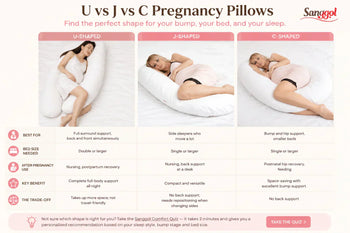
If you want the most “anchored” feel, a U-shaped full-body pillow supports your back and front at the same time, so you don’t have to rebuild your pillow setup every time you turn.
If you’ve also been wondering about stomach sleeping (especially early pregnancy), this related guide may help: Is Stomach Sleeping Safe During Pregnancy?
Is back sleeping always unsafe?
No. Back sleeping is generally fine in early pregnancy. Later, side sleeping is recommended as a precaution to support circulation.
What if I wake up on my back?
Simply roll onto your side and adjust your pillows. Brief position changes overnight are normal.
Which side is best?
The left side is often recommended for circulation, but either side is preferable to lying flat. Comfort and consistency matter too.
Is semi-reclined sleeping okay?
Many people find a slightly elevated upper body (while still side-leaning) reduces reflux and feels more comfortable than lying flat. If you feel dizzy or unwell lying back, switch position and speak to your midwife.
I can’t get comfortable on my side — what can I try?
Try anchoring support behind your back, adding a pillow between your knees, and supporting the bump. Full-body support often reduces the need to reposition repeatedly.
When should I ask my midwife or doctor?
If lying flat makes you repeatedly dizzy, nauseous, short of breath, or unwell — or if sleep disruption is affecting your wellbeing — speak to your healthcare provider for personalised guidance.
Back sleeping can feel natural, especially early in pregnancy. As the uterus grows, side sleeping becomes the safer long-term option because it supports circulation and reduces vena cava compression risk.
If you wake up on your back, don’t panic. Roll onto your side and reset your support. The goal is to settle to sleep on your side and make that position comfortable and stable.
With the right support, side sleeping does not have to feel restrictive. It can feel secure, aligned and deeply restful.
Disclaimer: This article is for informational purposes only and is not a substitute for professional medical advice. Always consult your doctor or midwife for personalised guidance.
2 minutes · Personalised
Not sure which pillow shape suits you?
Answer 5 quick questions about your sleep style, bump stage and bed size — we'll match you to the right pillow.
Take the Comfort QuizU · J · C Shaped
Find the pillow designed for your body
Three shapes, each built for a different sleep style and support need. Free UK delivery and 24-month guarantee included.
Shop Body PillowsFree downloads
Free guides, checklists and sleep plans
Download our free Mum-to-Be hospital bag checklist, birth partner guide and 7-Day Sleep Plan — no purchase needed.
Get the Free GuidesWant to keep reading?
Browse all articles by topic