Fibromyalgia and Sleep | Understanding Sleep-Related Disturbances
|
|
Temps de lecture 4 min
Vous possédez un compte ?
Connectez-vous pour payer plus vite.

Coussins de grossesse et coussins de corps (formes U, J et C)...
|
|
Temps de lecture 4 min
Living with fibromyalgia often means sleep feels lighter than it should. Pain, restless muscles, and a nervous system on high alert can turn nights into stop-start rest. This guide explains why sleep problems are so common with fibromyalgia and offers practical, comfort-first strategies you can try tonight.
Note: This article shares comfort-focused ideas and is not medical advice. For diagnosis or personalised care, speak with your GP or specialist team.
Fibromyalgia is a long-term condition marked by widespread pain, fatigue, and sensory sensitivity. Those same features can disrupt your ability to fall asleep, stay asleep, and wake feeling restored.
Many people with fibromyalgia describe sleep as feeling “light” or unrefreshing, even if they spend a full night in bed. Research suggests that deep restorative sleep stages may be reduced, which can leave people waking up tired despite adequate sleep time. Poor sleep can also increase pain sensitivity, creating a cycle that makes restful nights harder to achieve.
Here are some of the key reasons sleep can be affected:
For a plain-English overview of the condition itself, see the NHS guide to fibromyalgia.
There’s no single fix for sleep difficulties associated with fibromyalgia, but small and repeatable adjustments can make nights calmer and mornings steadier.
For a full walkthrough of positioning and pillow setups, see our pillar guide: How to Use Body Pillows for Fibromyalgia Support.
Explore U, J & C-shaped body pillows →
Creating the right environment can also help — start with how to create a sleep-conducive environment.
You may also find gentle routines helpful — explore Finding Your Sleep Sanctuary.
Sleep position can play a significant role in night-time comfort. Many people with fibromyalgia find that gentle side-sleeping positions feel more stable because they distribute pressure across a larger surface area.
Adding pillows between the knees, hugging a pillow in front, or supporting the back can help keep the spine aligned and prevent twisting movements during sleep.
Some sleepers also prefer a slightly supported side-back position — where the body is angled slightly upward with a pillow behind the back for stability.
Pressure sensitivity is common in fibromyalgia. Supporting key areas of the body may help distribute weight more evenly during sleep.
These small adjustments can help prevent micro-adjustments during the night and may make it easier for the body to stay settled.
Full-length pillows are popular among people looking to reduce twisting and pressure build-up during sleep.
Many sleepers find that a body pillow allows the knees, hips, shoulders, and arms to remain supported at the same time. When the body feels stable, there may be fewer overnight adjustments and interruptions.
If you're exploring pillow positioning strategies, you may also find these helpful:
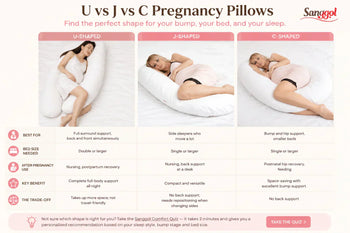
Many people find that full-length support reduces twisting and helps maintain alignment. This may reduce small sleep disruptions caused by pressure or muscle tension.
J-shaped pillows often allow more airflow because they wrap around one side of the body rather than both.
Your neck should remain aligned with your spine. If your head tilts up or down significantly, adjust pillow height or layering.
Further reading:
2 minutes · Personalised
Not sure which pillow shape suits you?
Answer 5 quick questions about your sleep style, bump stage and bed size — we'll match you to the right pillow.
Take the Comfort QuizU · J · C Shaped
Find the pillow designed for your body
Three shapes, each built for a different sleep style and support need. Free UK delivery and 24-month guarantee included.
Shop Body PillowsFree downloads
Free guides, checklists and sleep plans
Download our free Mum-to-Be hospital bag checklist, birth partner guide and 7-Day Sleep Plan — no purchase needed.
Get the Free GuidesWant to keep reading?
Browse all articles by topic