Fibromyalgia | Pillow Tips for Better Rest
|
|
Time to read 9 min
|
|
Time to read 9 min
Nights can feel longer when you live with fibromyalgia. Small changes to your sleep setup — especially your pillows — can make a noticeable difference in how settled you feel. This guide focuses on gentle, practical tips you can try tonight: choosing the right shapes, setting a comfortable pillow height, and arranging support so your body can relax into a more restful position.
Better rest usually does not come from one dramatic change. More often, it comes from reducing small irritations that build up through the night — pressure on a shoulder, a twisted hip, a neck that feels slightly unsupported, or bedding that becomes too warm. Pillow setup can help soften those interruptions and make sleep feel steadier.
This article shares comfort-focused ideas and is not medical advice. For diagnosis or personalised care, speak with your GP or specialist team.
Table of Contents
If you want the quick version before reading the full guide, these are some of the most helpful pillow adjustments many people start with first.
Fibromyalgia can make pressure and temperature shifts feel bigger than they are. If one shoulder or hip carries most of the load, your body compensates — cue bracing, fidgeting, and lighter sleep. A thoughtful pillow setup helps by filling the gaps between you and the mattress, spreading contact evenly and encouraging a neutral posture you can forget about.
That matters because restless sleep is not always caused by one major pain point. Sometimes it is a series of smaller discomforts that keep pulling the body out of rest. A slightly strained neck, unsupported knees, or a top shoulder rolling inward can all lead to repeated micro-adjustments. Over time, those small movements can leave sleep feeling broken and less restorative.
For general information about fibromyalgia, see the NHS overview.
For a broader comfort guide, explore our full piece: Fibromyalgia & Sleep Comfort Complete Guide.
Height is the most common comfort miss. Too high tilts the neck up; too low lets it collapse down. Side sleepers generally need more height than back sleepers. Here’s a quick way to test:
Adjustable pillows with removable fill can be especially helpful because comfort needs may change from week to week. Some nights you may want a little more loft, while other times a flatter setup feels calmer. Having that flexibility can make it easier to adapt without rethinking your whole sleep arrangement.
It also helps to judge pillow height after you have settled for a minute or two, rather than making a decision immediately. A pillow that feels fine at first can reveal pressure once your shoulders and neck begin to relax into it.
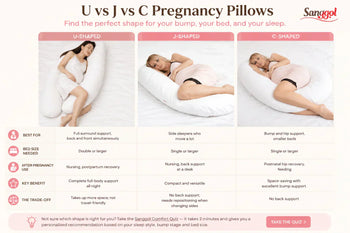
Different shapes support you in different ways. Choose based on space, temperature, and how much all-round support you want.
Support on both sides without flipping the pillow when you turn. Great if you change sides often or want a cocooned feel. Takes more room — ideal for larger beds or cooler rooms.
Smaller footprint with focused hip/back alignment and good airflow. Easy to reposition if you warm up at night. A strong choice for travel or shared beds.
Curves to support front and back at the same time while leaving room for your usual head pillow. A neat middle ground for many side sleepers.
No single shape is “best” for everyone. The right choice usually depends on how you sleep in real life — whether you turn often, sleep warm, need support behind the back, or prefer a pillow that feels less bulky. The goal is not to force yourself into a new position. It is to find a shape that works with the way your body already tries to settle.
Once you have the right shapes and height, use the pillow to stack joints and quiet hot-spots:
These small support points matter because they reduce the need for your body to keep correcting itself. When the hips, knees, shoulders, and waist feel more evenly supported, many people find they shift less often and settle more quickly after waking.
With fibromyalgia, discomfort often builds where the body presses most firmly into the mattress or twists slightly out of line. That is why reducing direct pressure can be just as important as choosing the right pillow shape.
If you sleep on your side, the top shoulder may roll inward and the lower shoulder may take too much load. Hugging a pillow can soften the inward pull on the upper shoulder, while a supportive head pillow can help reduce neck-and-shoulder strain together.
The hips often feel better when the knees and ankles are both supported. This helps reduce the forward drop of the top leg, which can otherwise pull through the hip and lower back.
If there is a noticeable gap between your waist and the mattress, a small rolled towel or slim pillow may help create gentler contact. Many people find this gives the body a more secure, less “hollow” feeling.
Even light support under the legs can help some sleepers feel less tense. It does not need to be dramatic — often a small, soft layer is enough to reduce that sense of pulling through the legs and hips.
For a more complete walkthrough of full-body positioning, see our pillar article: How to Use Body Pillows for Fibromyalgia Support.
Texture and temperature can be as important as shape. Many sensitive sleepers do best with smooth, breathable covers and adjustable layers:
Temperature changes can be especially disruptive when you are already sleeping lightly. A setup that feels fine at bedtime may feel stuffy in the early hours. That is why small, easy adjustments often work better than one heavy solution. The simpler it is to cool down or add warmth without fully waking up, the easier it can be to return to rest.
Consistency beats perfection. Use this short routine to cue your body toward rest:
The strength of a wind-down routine is not that it has to be perfect every night. It is that it gives your body the same quiet signals again and again. Over time, simple repetition can help reduce the frantic “trying to sleep” feeling that sometimes makes sleep harder.
Comfort strategies don’t stop at bedtime. Keeping support nearby during the day reduces built-up strain and can make the night easier:
This matters because night-time comfort often starts earlier in the day. If the body reaches bedtime already tense, braced, or overworked, it can be harder to settle. Small daytime support choices may help lower that build-up before you even get into bed.
You may also find these related guides helpful: Fibromyalgia – 7 Frequently Asked Questions Answered and When Parenting Meets Chronic Pain: Tips for Managing Fibromyalgia.
When you can’t bring the whole setup, a compact plan helps:
Travel sleep rarely feels exactly the same as home sleep, and that is fine. The goal is not perfection. It is keeping a few key support habits in place so your body still gets the cues it relies on most.
A good pillow should feel supportive on night one and night ninety. Look for:
Care tips when life happens (spills, warm nights, late-night snacks): keep a spare cover in the drawer — a 30-second swap can save a full wake-up.
If your pillow has started to feel uneven, flat in places, or less supportive than before, it may just need a refresh rather than replacing. Regular fluffing and reshaping can help restore comfort. For help with that, see how to reshape your body pillow.
Better rest with fibromyalgia isn’t about one perfect product — it’s the combination of shape, height, fabrics, and a simple routine. Start with what you can change tonight: adjust height, add a knee/ankle bridge, and pick a breathable cover. If that helps, consider a full-body pillow for steadier hip and shoulder alignment.
For a deeper overview of strategies, see our full guide: How to Use Body Pillows for Fibromyalgia Support.
There is no single best shape for everyone. Many people choose based on how much support they want, whether they sleep warm, and how much bed space they have. U-shaped, J-shaped, and C-shaped pillows each support the body differently.
Many people find that full-body support helps reduce twisting and repeated repositioning during the night. Supporting the knees, hips, shoulders, and back at the same time can make the body feel more settled.
If your neck feels tilted, strained, or unsupported, the height may be off. Side sleepers usually need more loft than back sleepers. The aim is to keep the neck in line with the spine rather than tipped up or down.
They can be. If heat and texture wake you easily, smoother and more breathable fabrics may help reduce discomfort and make it easier to stay settled through the night.
2 minutes · Personalised
Not sure which pillow shape suits you?
Answer 5 quick questions about your sleep style, bump stage and bed size — we'll match you to the right pillow.
Take the Comfort QuizU · J · C Shaped
Find the pillow designed for your body
Three shapes, each built for a different sleep style and support need. Free UK delivery and 24-month guarantee included.
Shop Body PillowsFree downloads
Free guides, checklists and sleep plans
Download our free Mum-to-Be hospital bag checklist, birth partner guide and 7-Day Sleep Plan — no purchase needed.
Get the Free GuidesWant to keep reading?
Browse all articles by topic