Pregnancy Tips : 10 Essential Tips for a Restful Pregnancy
|
|
Time to read 4 min
|
|
Time to read 4 min
This guide shares practical, comfort-focused sleeping tips to help you rest more easily throughout pregnancy.
Short answer: Sleeping well during pregnancy often comes down to comfort, routine, and gentle adjustments to your sleep environment. Small changes — such as side sleeping, supportive pillows, and calming bedtime habits — can make a noticeable difference as your body changes.
Navigating pregnancy involves far more than routine appointments. Day-to-day comfort, emotional balance, and quality rest play a major role in how supported you feel throughout this transformative time. Sleep can become more challenging as pregnancy progresses, but with the right approach, many expectant mothers find ways to rest more comfortably and wake feeling more refreshed.
Hormonal changes, physical adjustments, and an active mind can all affect sleep during pregnancy. Difficulty settling, frequent waking, or feeling unrested in the morning are common experiences. The good news is that thoughtful, comfort-led changes to your routine and sleep setup can help you feel more settled at night.
Below are ten essential, non-medical tips designed to support more comfortable sleep during pregnancy — focusing on positioning, environment, routines, and gentle lifestyle habits.
As your body changes, sleep positions that once felt natural may no longer feel comfortable. Many expectant mothers find that side sleeping becomes more comfortable as pregnancy progresses, particularly when supported properly.
Rather than focusing on “perfect” positioning, the goal is to feel stable and supported. Supporting your back, bump, hips, and legs can help reduce tossing and turning and make it easier to relax into sleep.
Side sleeping can feel awkward as your body changes.
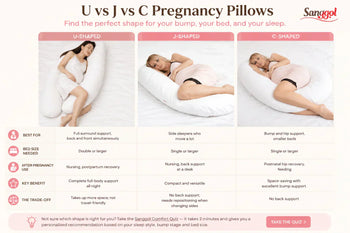
A U-shaped body pillow is designed to support your back, bump, hips and legs at the same time, helping you feel more settled and comfortable through the night.
Explore U-shaped pregnancy pillows →
A consistent bedtime routine helps signal to your body that it’s time to slow down. Gentle repetition is often more effective than dramatic changes.
Many people find it helpful to follow the same wind-down pattern each evening — for example, dimming lights, reading, taking a warm bath, or practicing slow breathing. The key is choosing calming activities that feel enjoyable rather than forced.
Over time, this regular rhythm can make it easier to relax into sleep.
Your bedroom environment plays a surprisingly large role in sleep quality. A cool, dark, and quiet space can help your body relax more naturally.
Supportive bedding, breathable fabrics, and pillows that adapt to your changing shape can make a noticeable difference. Many expectant mothers also find blackout curtains useful for minimising early morning light.
You can explore more ideas in our guide to creating a sleep-conducive environment.
Staying hydrated is important, but spacing fluid intake earlier in the day may help reduce night-time interruptions. Some people find it helpful to taper drinks in the last couple of hours before bed while continuing to drink regularly during the day.
This gentle adjustment can support longer, less interrupted periods of rest.
Light, pregnancy-appropriate movement during the day can help release tension and promote better rest at night. Activities such as walking, swimming, or gentle stretching are commonly chosen.
Movement doesn’t need to be intense to be helpful — consistency and comfort matter more than duration or pace.
As pregnancy progresses, additional support can help your body feel more balanced in bed. Supporting areas such as the knees, lower back, or bump may help you feel more stable and reduce the urge to shift positions frequently.
Some prefer layered standard pillows, while others find a single shaped pillow easier to manage.
Prefer a lighter, less bulky option?
A J-shaped body pillow offers focused support for side sleeping, while still allowing more freedom to move during the night.
View J-shaped body pillows →
Pregnancy often brings excitement alongside worry and mental load. If your thoughts feel busy at night, calming techniques such as slow breathing, gentle stretches, or journaling before bed may help ease the transition into sleep.
Sharing worries with a partner or trusted support person can also help lighten the mental load.
Bright screens and stimulating content can make it harder to unwind. Many people find it helpful to step away from phones, tablets, and televisions at least an hour before bedtime.
Replacing screen time with quieter activities can support a calmer end to the day.
Short naps can be helpful if night-time sleep feels broken. However, longer or late-afternoon naps may make it harder to fall asleep later.
Keeping naps earlier in the day and relatively brief can help maintain a gentler sleep rhythm.
Every pregnancy is different. If sleep difficulties feel ongoing or overwhelming, discussing them with a healthcare professional can provide reassurance and tailored guidance.
You may also find helpful background reading in our article on understanding common sleep challenges.
Yes. Changes in body shape, routine, and energy levels can all influence how comfortable sleep feels. Many people experience fluctuations in sleep quality at different stages of pregnancy.
Many expectant mothers find that supportive pillows help them feel more stable and relaxed in bed, particularly when side sleeping. The right shape often depends on personal preference and sleeping habits.
Not necessarily. Small, gradual adjustments are often easier to maintain and can still make a meaningful difference over time.
Keeping your pillow fresh and comfortable matters too.
Our U- and J-shaped pillowcases are designed to fit contour-shaped body pillows properly, making them easier to care for throughout pregnancy and beyond.
Shop fitted pillowcases →
Rest during pregnancy is not about perfection — it’s about comfort, flexibility, and listening to your body. By making small, supportive changes to how and where you sleep, you can create a calmer, more comfortable night-time routine.
Be patient with yourself, adjust as needed, and remember that what feels supportive may evolve as pregnancy progresses. Prioritising rest is one of the kindest things you can do for yourself during this time.
Sweet dreams, and wishing you a calm and comfortable pregnancy journey.
2 minutes · Personalised
Not sure which pillow shape suits you?
Answer 5 quick questions about your sleep style, bump stage and bed size — we'll match you to the right pillow.
Take the Comfort QuizU · J · C Shaped
Find the pillow designed for your body
Three shapes, each built for a different sleep style and support need. Free UK delivery and 24-month guarantee included.
Shop Body PillowsFree downloads
Free guides, checklists and sleep plans
Download our free Mum-to-Be hospital bag checklist, birth partner guide and 7-Day Sleep Plan — no purchase needed.
Get the Free GuidesWant to keep reading?
Browse all articles by topic