Neck and Shoulder Pain When Side Sleeping
|
|
Time to read 10 min
|
|
Time to read 10 min
If you wake up with neck and shoulder pain when side sleeping, you’re not alone. Side sleeping is often described as one of the more supportive positions, yet it’s also one of the most common positions linked to morning stiffness and one-sided aches.
The encouraging part is this: for many people, the pain is not because side sleeping is “bad”. It’s because the body is drifting out of alignment overnight — usually because support doesn’t match your shoulder width, your mattress response, or the way your hips rotate when you relax.
This guide breaks the problem down in plain English (no medical claims), shows you how to identify your likely trigger, and gives you a practical “fix it tonight” plan. The goal is to help you wake up feeling more comfortable — and to give you clear next steps if you want deeper guidance.
If you’re reviewing your setup, explore our Side Sleeper & Hip Support options. These are designed to stabilise the areas that usually cause drift: shoulder pressure, neck alignment, and hip rotation.
Side sleeping is popular because it can feel stable and relaxing. Many people find it easier to settle on their side than on their back, especially if they feel “too open” or restless when back sleeping. Side sleeping can also feel better for breathing for some people, because the tongue and soft tissues are less likely to fall backward compared to certain back-sleeping positions.
It’s also a common recommendation in specific contexts, including pregnancy. Not because side sleeping is magic — but because it can be a practical, comfortable position that reduces certain pressures and supports circulation. That said, comfort still depends on alignment. A “recommended” position can still cause discomfort if support isn’t right.
Side sleeping is usually fine when your body can relax without compensating. In practical terms, that means:
Reassurance: if your discomfort is mainly morning stiffness that eases as you move, that often points to a support and positioning issue rather than anything dramatic.
Side sleeping isn’t inherently harmful — but it does put higher demands on your setup. The position changes the way your body carries weight, and small mismatches become noticeable after several hours.
There are three common mechanical reasons people wake up sore:
When you lie on your side, one shoulder becomes a main pressure point. If your mattress is firm or doesn’t contour around the shoulder, the joint and surrounding tissues carry sustained load. Over time, that can feel like a deep ache, tenderness, or a “bruised” sensation — often on the side you sleep on most.
A common pattern is: you fall asleep comfortably, then wake up sore. That happens because pressure builds gradually. Your body may tolerate it for a while, then reacts once tissues have been compressed for hours.
Side sleepers usually need a pillow that fills the gap between the side of your head and the mattress. That gap changes depending on shoulder width and mattress firmness. If your pillow is too low, your head drops and your neck bends downward. If it’s too high, your head is pushed up and your neck bends the other way.
Even small angles matter when they last all night. The result is often morning stiffness rather than a sharp pain — because the muscles have been quietly stabilising your head for hours instead of resting.
If your top leg falls forward, your pelvis rotates. That rotation creates a subtle twist through the spine. Your upper body often responds by tightening through the shoulder and upper back to keep you stable. You might feel this as shoulder tightness, upper back tension, or neck stiffness that seems to “come from nowhere.”
If your pain is mainly one-sided, that often points to repeated pressure on your preferred side. If it’s mainly neck stiffness, pillow height is often the first adjustment. If it’s upper back and shoulder, hip rotation is usually involved.
One reason side-sleep discomfort feels confusing is that your setup can feel fine at bedtime. Then you wake up sore and assume something “happened” while you slept. In a way, it did — but it’s usually slow, not sudden.
Here’s what often changes overnight:
The goal isn’t “perfect posture.” The goal is a setup that stays supportive while you relax and move naturally. That’s why small targeted changes often work better than adding random extra pillows.
You don’t need to be “technical” to understand the core idea: comfort improves when your body weight is distributed well and your spine stays close to neutral. When pressure concentrates in one small area (like the shoulder), discomfort is more likely over time. When the neck is held at an angle for hours, surrounding muscles don’t fully rest.
Side sleeping is more demanding because it combines both challenges: one shoulder becomes a pressure point, and the neck needs the right height support to stay level. If the pillow is wrong for your shoulder width, the neck bends. If the mattress is too firm, the shoulder compresses. If the hips rotate, the spine twists. Most morning pain is simply one or more of these happening together.
If you want deeper diagnostic depth (what the pain patterns tend to mean and why), use this cluster guide: Why Side Sleeping Causes Pain in the First Place.
If your real struggle is staying on your side consistently (you fall asleep on your side, then end up on your back), this guide is the best next step: How to Train Yourself to Sleep on Your Side.
These steps are designed to be practical. You don’t need new purchases to test them. You’re simply adjusting height, pressure, and stability so your body can relax without compensating.
Correct neck height and stop hip rotation. Those two changes alone often reduce morning stiffness dramatically because they reduce the two biggest overnight compensations.
Many side sleepers try to solve this by adding more pillows. The problem is that multiple loose pillows often shift overnight. You fall asleep aligned, then one pillow moves, your knees separate, your hips rotate, and you’re back to square one.
What tends to work better is stable, structured support that keeps your body aligned as you relax. For side sleepers, the most important functions are:
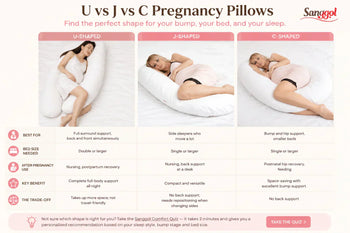
If repositioning and hip rotation are part of the problem, a J shaped body pillow for side sleepers provides continuous support from shoulder to knee, helping stabilise the upper body and hips together. That stability often reduces twisting and pressure points — without surrounding your whole body or taking over the bed.
If your pillow itself is the problem (flattening, too high, too low, or just “never quite right”), this cluster guide is designed to help you choose correctly: Choosing the Perfect Pillow for Your Sleeping Position.
This pillar is the hub. Use the guide below to go straight to the most relevant next step.
Neck and shoulder pain when side sleeping is often caused by alignment drift: the shoulder taking too much pressure, the neck tilting because pillow height doesn’t match your shoulder width, and the hips rotating forward and twisting the spine. The most helpful approach is to correct one variable at a time, starting with neck height and hip stability.
If you want a simpler setup that supports the key areas side sleepers struggle with, explore our Side Sleeper & Hip Support Collection and choose the option that fits how you sleep.
Browse the Side Sleeper & Hip Support Collection for targeted alignment support designed to reduce overnight drift — so you wake up feeling more settled.
Disclaimer: This article provides general sleep ergonomics information and does not replace medical advice. If symptoms persist, worsen, or include significant numbness/weakness, seek guidance from a qualified healthcare professional.
2 minutes · Personalised
Not sure which pillow shape suits you?
Answer 5 quick questions about your sleep style, bump stage and bed size — we'll match you to the right pillow.
Take the Comfort QuizU · J · C Shaped
Find the pillow designed for your body
Three shapes, each built for a different sleep style and support need. Free UK delivery and 24-month guarantee included.
Shop Body PillowsFree downloads
Free guides, checklists and sleep plans
Download our free Mum-to-Be hospital bag checklist, birth partner guide and 7-Day Sleep Plan — no purchase needed.
Get the Free GuidesWant to keep reading?
Browse all articles by topic