Why Back Pain Often Worsens at Night — and How Body Pillows Help
|
|
Time to read 5 min
|
|
Time to read 5 min
Back pain can show up in many ways — tightness after long hours sitting, stiffness when you wake, or discomfort that builds over time as everyday posture and pressure begin to affect the spine. While medical advice should always come first for persistent or severe pain, many people find that improving sleep posture is one of the simplest ways to reduce everyday discomfort.
For many people, back pain often feels worse at night. When the body finally lies down and movement stops, pressure points and alignment issues can become more noticeable. The way the body is supported during sleep plays a large role in how the back feels the following morning.
Many people notice that back discomfort becomes more obvious when they lie down. This can happen for several reasons. During the day the body moves frequently, shifting pressure between muscles and joints. At night those small adjustments happen less often, meaning the same areas may stay under pressure for longer periods.
Sleep posture also matters more than many people realise. If the hips rotate forward or the spine twists during sleep, tension may build through the lower back or shoulders. Even small alignment problems can feel more noticeable after several hours in the same position.
For many people, improving sleep support can help reduce the strain that builds overnight. The goal is not perfect posture — simply a position that places less pressure on the back while resting.
Before exploring body pillow support, it can help to look at a few practical adjustments that may improve sleep comfort. Many people who struggle with sleeping with back pain find that small changes to their sleep setup can make nights feel easier.
While these changes can help, many people find that maintaining good alignment through the night can still be difficult. This is where body pillows can provide additional support.
Back discomfort is often linked to everyday habits and physical strain rather than a single cause. Factors such as posture, movement patterns, and sleep position may all play a role.
If daily posture contributes to discomfort, you may also find these articles helpful:
The spine naturally forms gentle curves through the neck, mid-back, and lower back. When sleep posture disrupts these curves, muscles may work harder to compensate. Over several hours, this may lead to stiffness or discomfort.
Side sleeping is often comfortable for people with back discomfort, but it requires proper support. Without support between the knees, the top leg may pull forward and rotate the pelvis.
Back sleeping can feel supportive, but the lower back may arch if the knees lie flat. Placing support under the knees may help soften this curve.
Stomach sleeping often creates strain because it arches the lower back and twists the neck. Many people find side sleeping more comfortable with proper pillow support.
A body pillow supports the body in ways standard pillows often cannot. Instead of supporting just the head or neck, it supports multiple areas of the body at once — particularly the shoulders, hips, and knees.
This added support may help reduce twisting through the spine and encourage a more stable sleeping posture.
The aim isn’t perfect posture — it’s simply reducing strain. When the body is supported in a more natural position, many people wake with less stiffness and tension.
Pregnancy can increase pressure through the hips and lower back. Full-body support can help stabilise side sleeping.
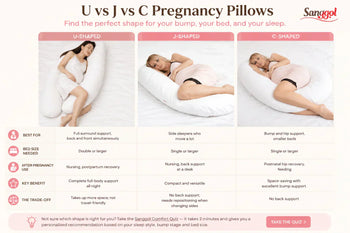
U-shaped body pillows are commonly used for full wrap-around support.
For targeted side support: a J-shaped body pillow provides support along one side of the body.
For full wrap-around support: a U-shaped pillow supports both sides of the body.
You may also find these helpful:
If you're reviewing your sleep setup more broadly, you may also find this helpful: Is Your Pillow Harming Your Health?
Many people find side sleeping with knee support or back sleeping with support under the knees helpful.
Body pillows may help improve alignment and reduce pressure points during sleep.
Reduced movement and unsupported posture may make pressure points more noticeable during sleep.
Back discomfort can feel frustrating, particularly when it interferes with sleep. While medical advice is important for persistent pain, improving sleep support is often a helpful step many people can take.
By reducing twisting and supporting the body more evenly, a well-placed body pillow may help create a more stable sleep posture. Over time, these small improvements can make nights feel more comfortable and mornings feel easier.
Blog Post by Sanggol Blogs | Sanggolcomfort.com — manufacturers of U Body Pillows | J Body Pillows | C Body Pillows.
2 minutes · Personalised
Not sure which pillow shape suits you?
Answer 5 quick questions about your sleep style, bump stage and bed size — we'll match you to the right pillow.
Take the Comfort QuizU · J · C Shaped
Find the pillow designed for your body
Three shapes, each built for a different sleep style and support need. Free UK delivery and 24-month guarantee included.
Shop Body PillowsFree downloads
Free guides, checklists and sleep plans
Download our free Mum-to-Be hospital bag checklist, birth partner guide and 7-Day Sleep Plan — no purchase needed.
Get the Free GuidesWant to keep reading?
Browse all articles by topic