Position de sommeil | Choisir l’oreiller parfait
|
|
Temps de lecture 6 min
Vous possédez un compte ?
Connectez-vous pour payer plus vite.

Coussins de grossesse et de corps (formes en U, J et C)...
|
|
Temps de lecture 6 min
Choisir le bon oreiller ne dépend pas de sa douceur ni de sa marque — cela dépend de l’alignement.
Votre position de sommeil modifie la façon dont votre cou, vos épaules et votre colonne vertébrale sont soutenus tout au long de la nuit. Un oreiller qui convient parfaitement à une position peut provoquer raideur ou tension dans une autre — c’est pourquoi tant de personnes se réveillent avec des tensions au cou ou une gêne à l’épaule, même lorsque leur matelas leur semble « correct ».
Dans ce guide, nous expliquons comment le sommeil sur le côté, sur le dos et sur le ventre influence votre alignement, comment repérer si votre oreiller vous désaligne, et comment choisir un soutien qui tient toute la nuit.
Si votre objectif principal est un meilleur alignement et moins de mouvements pendant la nuit, commencez ici : Collection d’oreillers corporels pour dormeurs sur le côté et soutien des hanches.
Lorsque vous vous allongez, la gravité modifie la répartition de votre poids. Sur le dos, le poids se répartit plus uniformément. Sur le côté, une épaule supporte une plus grande partie du poids du haut du corps. Sur le ventre, votre tête reste tournée d’un côté pendant des heures.
Le rôle de votre oreiller est de maintenir votre cou aligné avec le reste de votre colonne vertébrale. Si votre tête est trop inclinée vers le haut ou vers le bas, les muscles du cou restent subtilement actifs toute la nuit au lieu de se relâcher complètement — et c’est souvent là que commence la raideur du matin.
Un oreiller peut sembler « agréable » au coucher et pourtant avoir la mauvaise hauteur à 3 h du matin s’il se tasse ou se déplace.
Le sommeil sur le côté est la position la plus courante — et aussi celle qui dépend le plus de la hauteur de l’oreiller. Lorsque vous dormez sur le côté, votre épaule crée un espace entre votre tête et le matelas. Cet espace doit être comblé, mais pas trop.
Pour les personnes qui se réveillent avec des douleurs au cou ou à l’épaule, le confort en position latérale dépend généralement de deux choses : la bonne hauteur d’oreiller et la prévention de la rotation des hanches. Si c’est votre cas, ces guides de cluster vont plus loin :
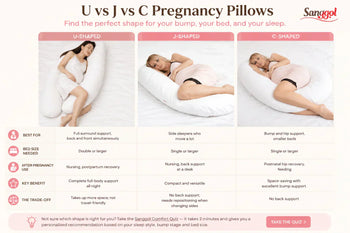
Si vous préférez un soutien ciblé (sans qu’un énorme oreiller envahisse le lit), découvrez notre Oreiller corporel en J. Il est conçu pour aider à stabiliser le haut du corps et soutenir les genoux/hanches afin de réduire les torsions pendant la nuit.
Dormir sur le dos peut être une position neutre — mais seulement si votre oreiller soutient la courbure naturelle de votre cou. Si l’oreiller est trop plat, votre tête peut basculer vers l’arrière. S’il est trop haut, votre menton est poussé vers la poitrine. Dans les deux cas, cela peut entraîner une raideur au réveil.
Dormir sur le ventre est la position la plus exigeante mécaniquement, car votre tête doit se tourner d’un côté pour respirer. Plus l’oreiller est haut, plus l’angle de rotation est important — ce qui peut augmenter la tension cervicale avec le temps.
Guide associé : Dormir sur le ventre est-il sans danger pendant la grossesse ?
Au lieu de deviner, recherchez des schémas. Votre oreiller est peut-être contre-productif si vous remarquez :
Ce sont des indices de « compensation » — votre corps essaie de recréer l’alignement manuellement.
Les oreillers standard soutiennent surtout la tête. Les oreillers corporels soutiennent l’alignement. Pour les dormeurs sur le côté en particulier, soutenir seulement la tête ne suffit souvent pas — car la rotation des hanches peut tordre la colonne et tirer la tension vers le haut du dos et l’épaule.
Un oreiller corporel bien conçu peut aider à :
Utilisez ceci comme guide de décision simple :
Quelle hauteur d’oreiller est idéale pour les dormeurs sur le côté ?
Assez haute pour garder la tête alignée avec la colonne vertébrale. La largeur des épaules et la fermeté du matelas modifient toutes deux la hauteur idéale.
Un oreiller plus ferme est-il toujours meilleur ?
Pas nécessairement. La stabilité compte plus que la « fermeté ». L’essentiel est un garnissage constant qui ne s’affaisse pas pendant la nuit.
Pourquoi une seule épaule me fait-elle mal quand je dors sur le côté ?
Il s’agit souvent du côté sur lequel vous dormez le plus. La concentration de la pression pendant plusieurs heures peut provoquer des douleurs au réveil.
Le mauvais oreiller peut-il provoquer des maux de tête ?
Il peut y contribuer. Un mauvais alignement du cou peut créer une tension musculaire qui irradie parfois vers le haut.
Mon matelas est-il le vrai problème ?
Peut-être — surtout s’il est très ferme ou très souple. Mais l’alignement de l’oreiller est généralement le premier ajustement le plus simple à tester.
Choisir le bon oreiller selon votre position de sommeil ne relève pas des tendances. C’est une question d’alignement. Lorsque votre cou est soutenu à la bonne hauteur et que votre corps reste stable toute la nuit, le sommeil devient plus facile — et les matins meilleurs.
Si vous souhaitez découvrir des options structurées conçues pour soutenir l’alignement en position latérale et la stabilité des hanches, parcourez notre : Collection d’oreillers corporels pour dormeurs sur le côté et soutien des hanches.
Avertissement : Cet article fournit des informations générales sur l’ergonomie du sommeil et ne constitue pas un avis médical. Si les symptômes persistent, s’aggravent ou s’accompagnent d’un engourdissement important, d’une faiblesse ou de douleurs sévères, demandez conseil à un professionnel de santé qualifié.
2 minutes · Personalised
Not sure which pillow shape suits you?
Answer 5 quick questions about your sleep style, bump stage and bed size — we'll match you to the right pillow.
Take the Comfort QuizU · J · C Shaped
Find the pillow designed for your body
Three shapes, each built for a different sleep style and support need. Free UK delivery and 24-month guarantee included.
Shop Body PillowsFree downloads
Free guides, checklists and sleep plans
Download our free Mum-to-Be hospital bag checklist, birth partner guide and 7-Day Sleep Plan — no purchase needed.
Get the Free GuidesWant to keep reading?
Browse all articles by topic