How to Sleep After a C-Section
|
|
Time to read 10 min
|
|
Time to read 10 min
Reviewed: 19 September 2025
If you're wondering how to sleep after a C-section, you're not alone. A C-section is major abdominal surgery. In the first weeks, sleep is less a single stretch and more a series of careful pauses between feeds and healing. This guide focuses on what actually helps at night: safer movements (so you don't tug at the scar), a supportive bed set-up, night-feeding ergonomics, gentle micro-routines, positions that reduce strain, and a simple week-by-week picture. For a broader healing roadmap beyond sleep, see our C-Section Recovery guide.
Important: This guide is informational and not medical advice. After a C-section (also spelled caesarean), seek urgent help for fever, increasing wound pain, redness, discharge, foul-smelling lochia, chest pain, sudden leg swelling, or breathlessness. See: NHS — Caesarean section: Recovery.
The first night after a c-section looks different depending on where you are. In hospital, you'll have call bells, monitoring, and staff nearby — but the environment is noisy and the bed is firm. At home, you have more control over your environment but less immediate support. Both settings need the same basics: a clear path to get up, essentials within reach, and someone who knows the log-roll technique alongside you.
Lying flat can tug along the incision; turning may wake you as your core braces; and sitting up in one go asks too much of tissues still knitting together. Add normal post-birth emotions and fragmented feeds, and rest becomes a moving target. The aim isn't perfect sleep; it's steady comfort and less strain so drifting off becomes more likely — even in shorter blocks. Many parents also underestimate how much posture influences pain perception; setting up support before you get tired prevents the "I'll just make do" spiral at 3am.
Another reason nights can feel harder than days is timing. As stimulation drops, the brain notices background discomfort more. Aligning rest with your most comfortable window — often shortly after prescribed pain relief — can make the difference between dozing and staring at the ceiling. It's not a failure to plan around medication; it's smart pacing while tissues heal.
The simplest change with the biggest payoff is the log-roll. Bend your knees, roll to your side in one smooth piece (shoulders, hips and knees aligned), let your lower legs fall towards the floor, and press your forearm into the mattress to push to sitting as you exhale. A small "hug" pillow over the abdomen can add confidence when coughing or shifting. If your bed is very low or very high, adjust with sturdy risers or a step so getting up doesn't force a deep bend or a sudden heave.
Short, frequent walks are often encouraged to support circulation — follow your hospital's discharge plan. Some people also find a soft abdominal support helpful if advised by their clinician; comfort, not compression, is the goal. For a plain-English overview after a caesarean, see: Better Health Channel — Caesarean section.
Think of the bed as a sling that holds you. A semi-reclined backrest takes pull off the abdomen and makes night feeds calmer. If you're sharing the bed, reserve one side so you can roll out the same way every time — routine makes movement safer. Smooth the sheet, remove extra scatter cushions, and keep a clear path to the bathroom so you don't twist around obstacles.
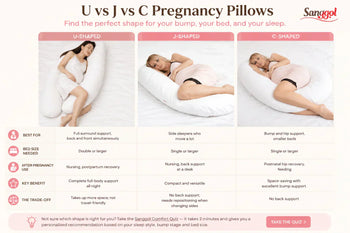
A full-length body pillow keeps side-lying stable so you don't twist across the scar. Tuck the lower end between your knees and draw the upper end so your forearm rests on it; that tiny forearm support stops you from rolling forward. A smaller "hug" pillow gives gentle counter-pressure when you cough or turn. Keep water, phone and prescribed pain relief within reach to avoid big movements at 3am. If night sweats are an issue, a breathable cotton layer or towel under your torso makes quick changes painless.
Many people find that a U-shaped pregnancy pillow helps keep this position stable throughout the night, reducing unintentional turning onto the incision.
Instead of perching upright and tensing your shoulders, let the bed carry your weight. In a laid-back, semi-reclined position your back rests against the pillow stack and the incision isn't pulled tight. Side-lying is another gentle option: keep a pillow between knees, bring baby to you with rolled towels, and avoid twisting. The NHS suggests side-lying and rugby/football holds if a caesarean scar is tender: NHS — Breastfeeding positions.
Bottle-feeding at night benefits from the same principles: semi-recline, feet supported, elbows resting on pillows so shoulders drop, and everything you need within reach. If you're pumping, position the kit on a trolley or bedside shelf so you don't twist; sit semi-reclined with a small pillow behind the lower back, and keep tubing free from tangles that would make you lean.
If you're supporting someone after a caesarean, your quiet, practical help changes the night. Prep the bedside before sleep — water, medication (as prescribed), nappies, wipes, burp cloths — and keep the pathway clear. During feeds, lift and settle the baby so the abdominal wall stays relaxed. After each feed, restack the backrest, replace the knee pillow, and do a one-minute tidy so the next wake-up is calmer than the last.
Semi-reclined. A firm pillow stack (or wedge) lets your torso rest into support so the wound doesn't feel taut. Many find this the easiest position to transition into and out of during the first fortnight.
Side-lying. A full-length pillow between knees keeps hips aligned; a small "hug" pillow across the abdomen prevents twisting. If your shoulder aches, add a slim pillow under the top arm so it doesn't dangle forward.
Back-lying. If this is your preference, slip a pillow under knees or calves to soften the lower back. Re-introduce stomach-lying later only if it truly feels comfortable and your clinician agrees.
One of the most practical things you can do after a c-section is plan your rest windows around your pain relief. Most prescribed pain relief after a caesarean takes 20–40 minutes to reach full effect. Taking it then lying down — rather than waiting until you're in pain and desperate — means you're resting in your most comfortable window.
This isn't about dependency; it's about giving healing tissue the best chance to rest. Ask your clinician about the safe timing and spacing of your prescribed medication. If over-the-counter paracetamol is part of your plan, it can often be taken regularly (not just when pain peaks) to maintain a steadier baseline.
Weeks 0–2. Expect fragments. Align rests with comfort windows; use the log-roll every time you get in or out of bed. Keep movements minimal in the night — prepare before you're sleepy so you aren't improvising in the dark.
Weeks 2–4. Turning feels steadier; back-lying with a knees-pillow is usually kinder. Extend rest windows gradually rather than chasing one long stretch. If you notice new or asymmetric pain, scale back and check in with your midwife or GP.
Weeks 4–6+. Many return to preferred positions if genuinely comfortable and clinically cleared. Maintain the good habits — support, pacing, log-roll — so small gains keep adding up. When daytime energy improves, consider a short, consistent wind-down (lights down, phone away, pillows set) to signal sleep even when nights are still broken.
Choose supportive positioning now and protect your caesarean incision while you heal.
NHS — Caesarean section: Recovery
NHS — Breastfeeding positions
Better Health Channel (Victoria, AU) — Caesarean section
C-Section Recovery: Honest Tips for Healing Week by Week
Side sleeping: fixing neck and shoulder pain
U, J or C-shaped pillow — which is right for recovery?
Side sleeper and hip support pillows
2 minutes · Personalised
Not sure which pillow shape suits you?
Answer 5 quick questions about your sleep style, bump stage and bed size — we'll match you to the right pillow.
Take the Comfort QuizU · J · C Shaped
Find the pillow designed for your body
Three shapes, each built for a different sleep style and support need. Free UK delivery and 24-month guarantee included.
Shop Body PillowsFree downloads
Free guides, checklists and sleep plans
Download our free Mum-to-Be hospital bag checklist, birth partner guide and 7-Day Sleep Plan — no purchase needed.
Get the Free GuidesWant to keep reading?
Browse all articles by topic