Pregnancy Pillow for Back and Hip Comfort
|
|
Time to read 8 min
|
|
Time to read 8 min
Finding a comfortable sleeping position during pregnancy can be surprisingly hard. As your body changes, new pressure points appear, your centre of gravity shifts, and familiar positions stop feeling supportive. Back and hip discomfort are especially common — but with the right setup, nights can feel more restorative and less stop–start.
This guide explains how pregnancy pillows support back and hip comfort, how to choose the right shape, and simple ways to set up your sleep space so you wake up less stiff and more refreshed.
Back and hip pain at night is one of the most searched pregnancy discomforts — especially in the second and third trimester. The good news is that most night-time strain is mechanical rather than medical. That means small positioning changes, particularly with the right pillow support, can make a meaningful difference without overcomplicating your routine.
Back and hip discomfort during pregnancy is not random. It happens for specific mechanical reasons. Understanding those reasons helps you adjust your sleep setup more effectively instead of guessing.
During pregnancy, the body produces a hormone called relaxin. Its purpose is to soften ligaments around the pelvis so the body can prepare for birth. But softer ligaments also mean less joint stability.
When the joints around the hips and lower spine become more mobile, muscles must work harder to stabilise them — even while you sleep. That extra effort often shows up as morning stiffness, dull hip ache, or lower back tightness.
As your bump grows, your centre of gravity moves forward. To compensate, the lower spine curves more deeply. This increased curve places additional pressure on the lumbar region and can cause muscles to fatigue more quickly overnight.
When lying on your side without knee support, the top hip tends to roll forward. That small rotation twists the pelvis and pulls the lower back out of alignment. Over several hours, even a subtle tilt can create noticeable discomfort.
Some women experience sharper pain that travels down one leg. This can happen when muscle tension or pelvic shift irritates the sciatic nerve. Proper alignment and stable support reduce this irritation significantly.
The NHS notes that tiredness and disrupted sleep are among the most common pregnancy challenges. As the uterus grows, posture changes and can place extra load on the lower back and hips. That’s why side-sleeping with supportive cushioning becomes so helpful — it reduces strain, encourages better alignment, and helps you settle for longer stretches.
Think of night comfort as a small chain of wins: better positioning → less fidgeting → fewer wake-ups → deeper, more useful rest.
A pregnancy pillow is more than a cushion — it’s a simple positioning tool. By filling the gaps between your body and the mattress, it supports your back, stacks your hips, and gently cradles your bump so you’re not bracing through the night.
Different types of discomfort require slightly different adjustments.
Identifying the pattern helps you adjust more precisely rather than simply adding more pillows randomly.
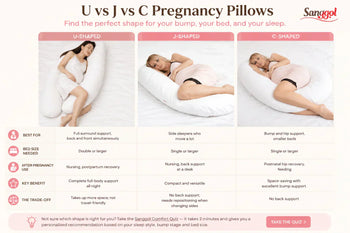
Different shapes work for different sleepers. Here’s how to match the design to your needs.
Wraparound support on both sides of the body. Great if you switch sides in the night — there’s no need to flip the pillow. Also useful if you like a little back support while side-sleeping.
Targeted support with a smaller footprint. Ideal for focused hip and back comfort, or if you tend to overheat and want more airflow.
Curves round to support bump and back at once, leaving room for your usual head pillow. A neat middle ground if you share a smaller bed.
Sleep discomfort evolves as pregnancy progresses.
Hormonal fatigue and breast tenderness are more common than hip strain early on. Support is often preventative at this stage. You can read more about early changes in our First Trimester guide.
As the bump grows, centre-of-gravity shift becomes more noticeable. Hip alignment becomes more important to prevent overnight twisting.
Pelvic pressure increases significantly. Stable knee stacking and back support become essential to reduce strain and help you turn more comfortably during the night.
The “best” pillow is the one that fits your space, sleep style, and preferences. Use this checklist before you buy:
Still on the fence? Read a pillow’s dimensions and compare to your mattress width — a quick tape measure saves guesswork.
Comfort comes from the whole setup, not just the pillow. Small tweaks reduce tossing and turning and make feeds or night bathroom trips gentler on your body.
Want a guided start? Begin with Day 1 of our 7-Day Sleep Comfort Plan — it’s all about creating a sleep space that works for you.
Pregnancy pillows are handy well after birth. Many parents keep theirs for night feeds, postpartum rest, and co-sleeping setups where the adult needs extra hip and back support (keep adult pillows clear of baby’s space, and follow safer-sleep guidance). Partners often “borrow” them too — lots of side-sleepers appreciate the hip-stacking comfort long-term.
A quality pillow should feel supportive on night one and month nine. Pay attention to fill, cover, and care instructions so it holds its shape and stays fresh.
Support quality also affects comfort. A pillow that flattens too quickly forces muscles to compensate again. Look for filling that rebounds after compression and maintains structure through the night.
If you’re unsure how pillow positioning changes across pregnancy, our Pregnancy Pillow Guide for Every Trimester explains how support needs evolve.
If you want to reduce discomfort immediately, focus on these adjustments:
These changes often reduce morning stiffness within a few nights.
A supportive pillow does a lot of the heavy lifting, but pairing it with simple habits makes an even bigger difference:
For broader pregnancy sleep guidance, see the NHS overview on sleep in pregnancy.
If you're adjusting your sleep setup, these guides can help you go deeper:
Pregnancy places new demands on your body, especially at night when muscles are trying to recover. Back and hip discomfort is common — but it’s rarely inevitable. With proper alignment, supportive cushioning, and consistent positioning, many women notice a meaningful reduction in stiffness and interrupted sleep.
The goal isn’t perfection. It’s stability. When your hips stay level and your spine remains neutral, your body can rest instead of compensate.
Yes. Hormonal joint softening, pelvic shifts, and increased spinal curvature commonly cause hip discomfort at night. Proper alignment and knee support often reduce the intensity significantly.
Side compression and pelvic tilt can cause uneven pressure. Ensuring your knees and ankles are stacked and your bump is supported usually reduces one-sided strain.
Yes. Pelvic shift and muscle tension can irritate the sciatic nerve. Maintaining spinal neutrality and avoiding twisting reduces nerve-related discomfort.
Most guidance suggests side sleeping from mid-pregnancy onward. Side positioning improves circulation and reduces pressure on major blood vessels.
U-shaped pillows provide full-body stability, while J-shaped designs offer more targeted hip and back support with a smaller footprint. The best choice depends on bed space and personal preference.
When positioned correctly, they reduce pelvic rotation and muscle compensation overnight. This often results in less morning stiffness and improved rest quality.
This article is for general information only and is not a substitute for medical advice. If your pain is severe, persistent, or accompanied by symptoms such as numbness, weakness, bleeding, or reduced fetal movement, contact your midwife, GP, or maternity unit.
2 minutes · Personalised
Not sure which pillow shape suits you?
Answer 5 quick questions about your sleep style, bump stage and bed size — we'll match you to the right pillow.
Take the Comfort QuizU · J · C Shaped
Find the pillow designed for your body
Three shapes, each built for a different sleep style and support need. Free UK delivery and 24-month guarantee included.
Shop Body PillowsFree downloads
Free guides, checklists and sleep plans
Download our free Mum-to-Be hospital bag checklist, birth partner guide and 7-Day Sleep Plan — no purchase needed.
Get the Free GuidesWant to keep reading?
Browse all articles by topic